Ups and Downs
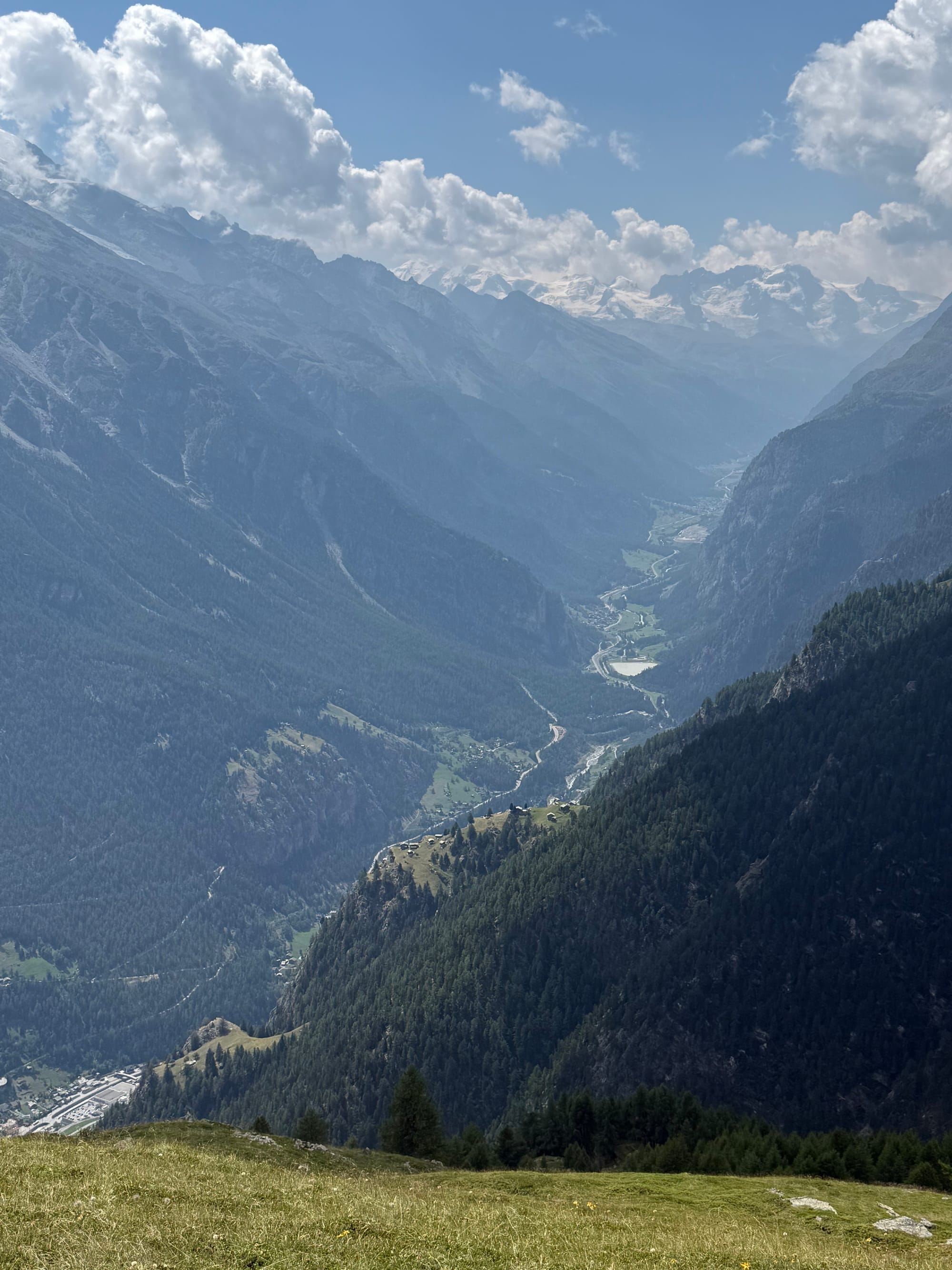
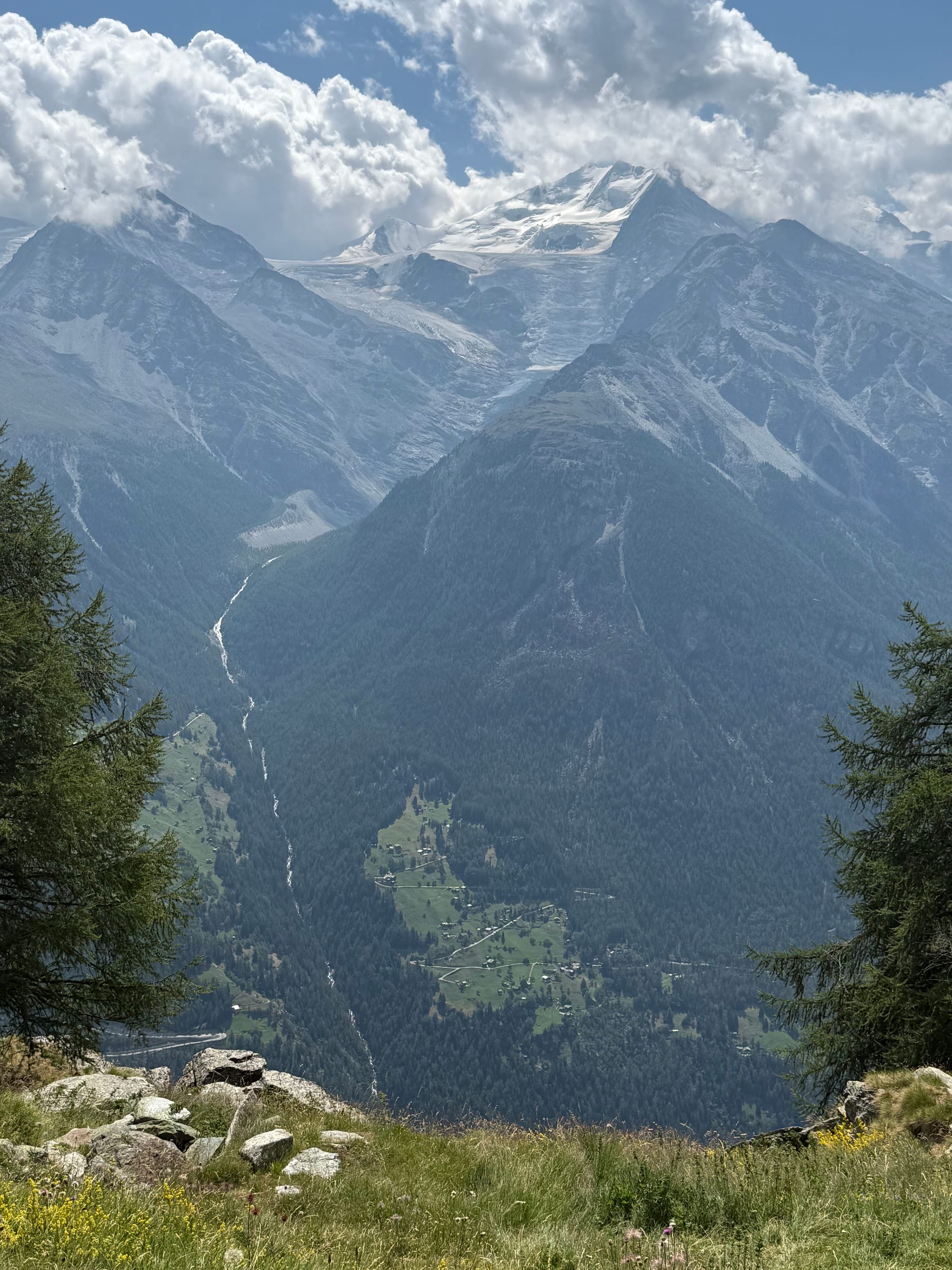
The alps are immense. They are always bigger in reality than in my memory. You can walk for days and not get from valley to summit. The average distance on this hike is 10-12 miles a day. Pretty moderate, right? But it's the elevation gain and loss that matters. Every day you climb up 3000-4000 feet, and right back down. OR, you climb down and go right back up. OR, you go up down up down! Some days have a 6 or 7000ft ascent or descent. That takes a while.
Most distance hikers, me among them, have a strong preference for ascending. You are working against gravity, which is very stable. It's a muscular and cardio vascular challenge, but if you find the pace where you never get out of breath, there's nothing to stop you. It doesn't get scary until it's nearly vertical, because you're sort of with the mountain. Of it.
I learned to walk this terrain with my Swiss dad when I was 15, and he was 50. Heading up our first mountain, he immediately fell into this (very) slow, rhythmic stride; step, step, step, my stepmother and then me behind him. Half an hour on, a group of hikers passed us going very fast, gabbling to each other. I longed to join them. Step, step, step. Hypnotic.
After another hour, we crested a rise, and found the hikers seated on boulders, eating and drinking voraciously. My mouth was dry, I was hungry, I looked at my Dad hopefully. Step, step, step. Some time after that, the pack of hikers passed us again. A little slower, conversation less voluable. Again, I longed to join them. Step, step, step. Would we never stop? Step, step, step.
After forever, on a small sunny ridge by a high spring, my Dad announced "Lunch!" We shed our packs, I rushed to the cold water welling out of the earth. "Not too much," he admonished, handing me a hard boiled egg, a handful of nuts and dried fruit, and an apple. I sat on a rock and inhaled the food. Too soon, we were up again, back on trail. But somehow it was easier, my body was getting it. We just kept walking.
And then a crazy thing happened. Some time later, we came upon the hikers one more time, now toiling ever so slowly up the path, far too winded for chatter. One by one, we passed them, silently, smoothly, gliding up and up and up. Perhaps discouraged by this, they stopped again, throwing themselves down in the grass by the path.
At the summit, we sat and swang our legs and shared an enormous chocolate bar. Looking down the steep slope, I was amazed to see the other hikers far below us, still laboring up the hill, breathing hard and sweating. I looked at my Dad, and he raised a single eyebrow in what could only be called a smirk. "Up here," he said, "slow is fast."
You can speed up a short hill, but not these long climbs. It takes patience and commitment, and there is all the time in the world to reflect on your failures and losses. It's not a recipe for levity. It's a practice, a meditation, a lifestyle.
Down is an entirely different matter. Used to be, the best way down was simply as fast as possible. In a kind of semi controlled fall, it was all good eyesight, nimble foot work, quick reflexes, and nice squishy joints. It was exhilerating and terrifying. Now, with my curmudgeonly knees, it's a different situation altogether. Step by careful step, I ease myself down as gently as possible. Unlike when climbing, going down I always feel separate from the mountain, like it could just shrug me off.
Generally in the second half of the day, the down is the time to think ahead about food and drink and showers. There's a little more room in the brain. It's not at all demanding in terms of heart rate or breath, but it is punishing on the legs and feet. By the end of the day, my feet feel pulpy in my shoes, and I want to write them an apology letter and invite them on a beach vacation.
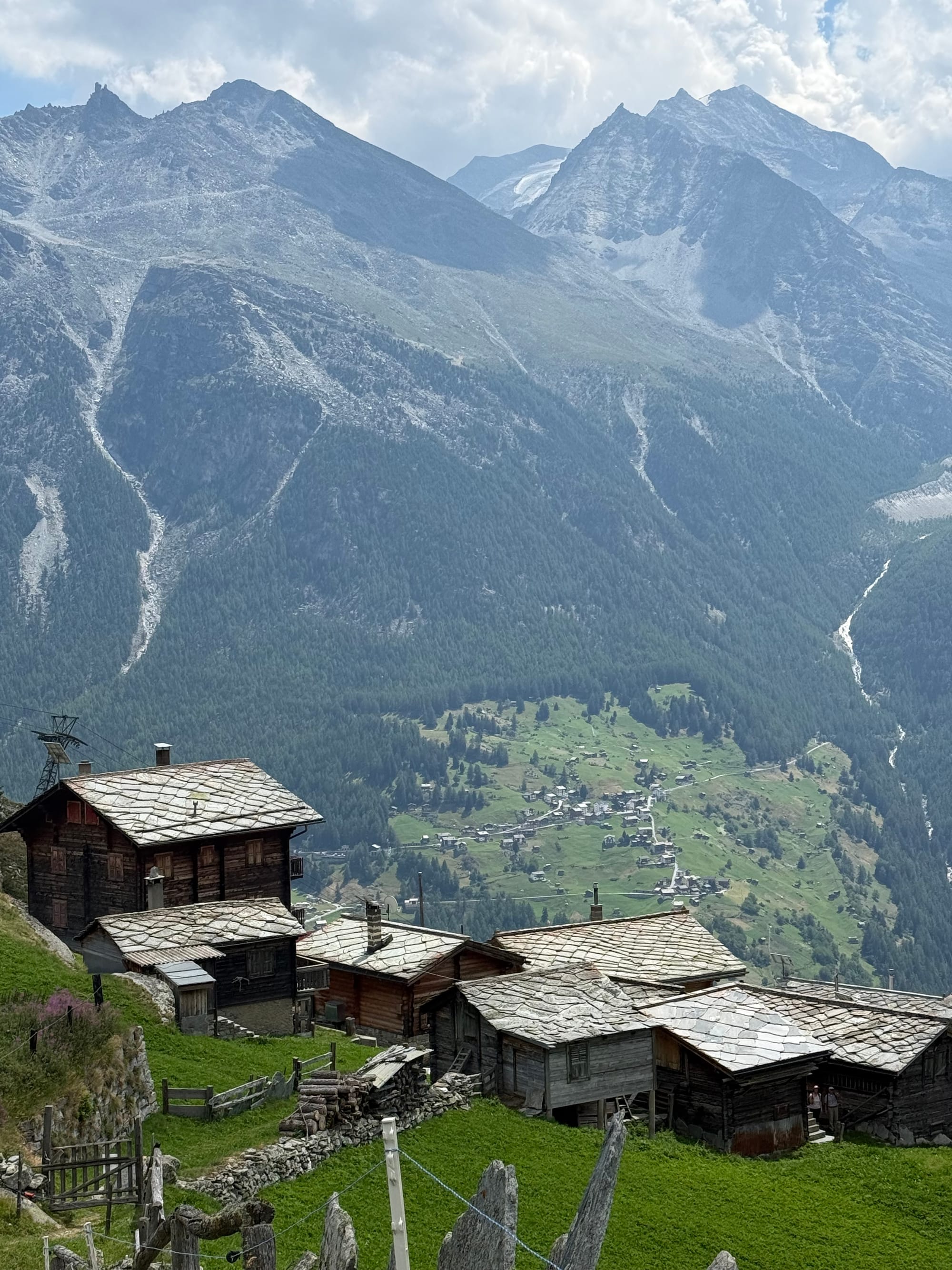
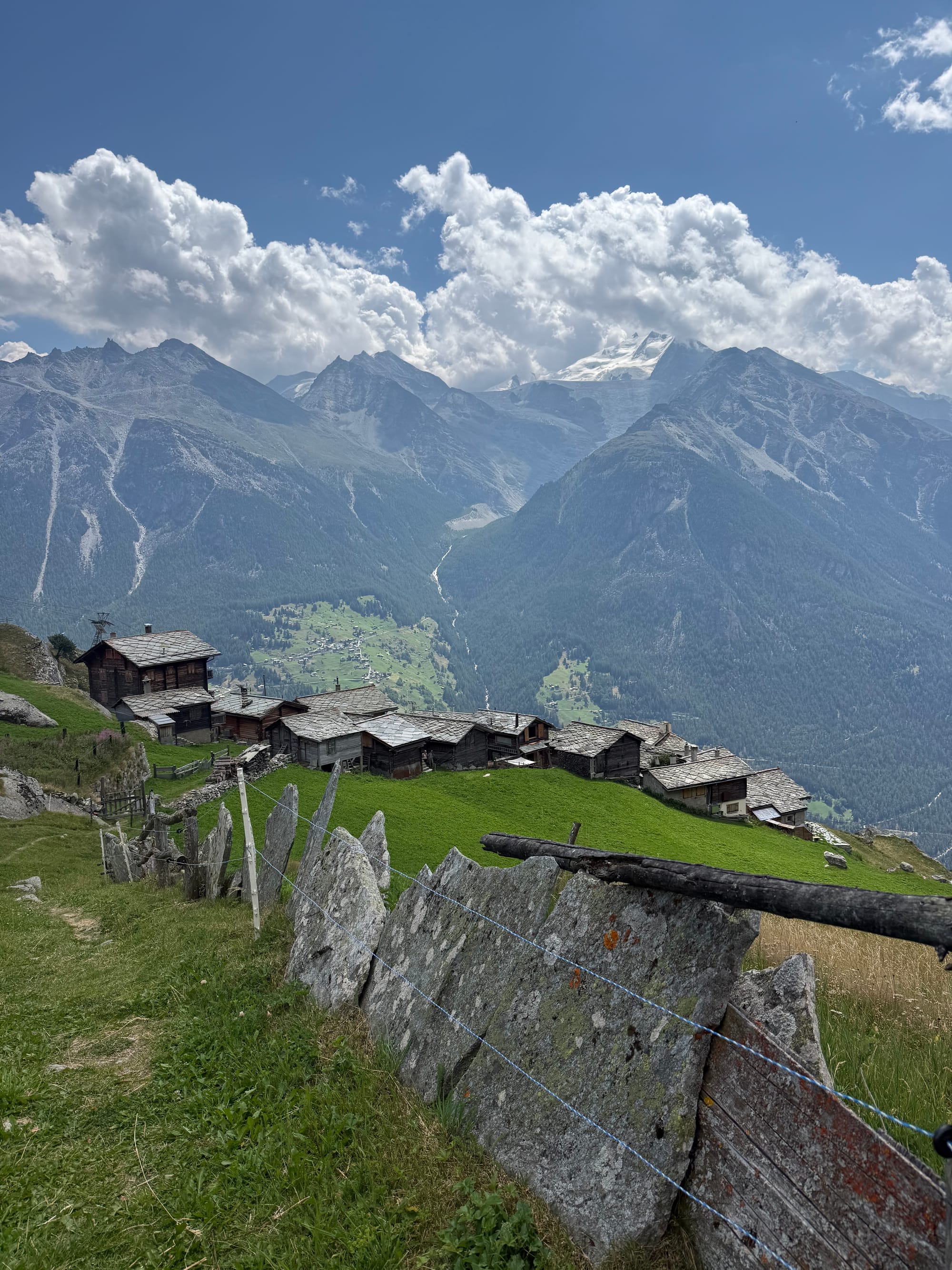
Today was gorgeous, with, yup, a 6000 foot descent. I am trying not to hear all the grumbling from my lower extremities.